
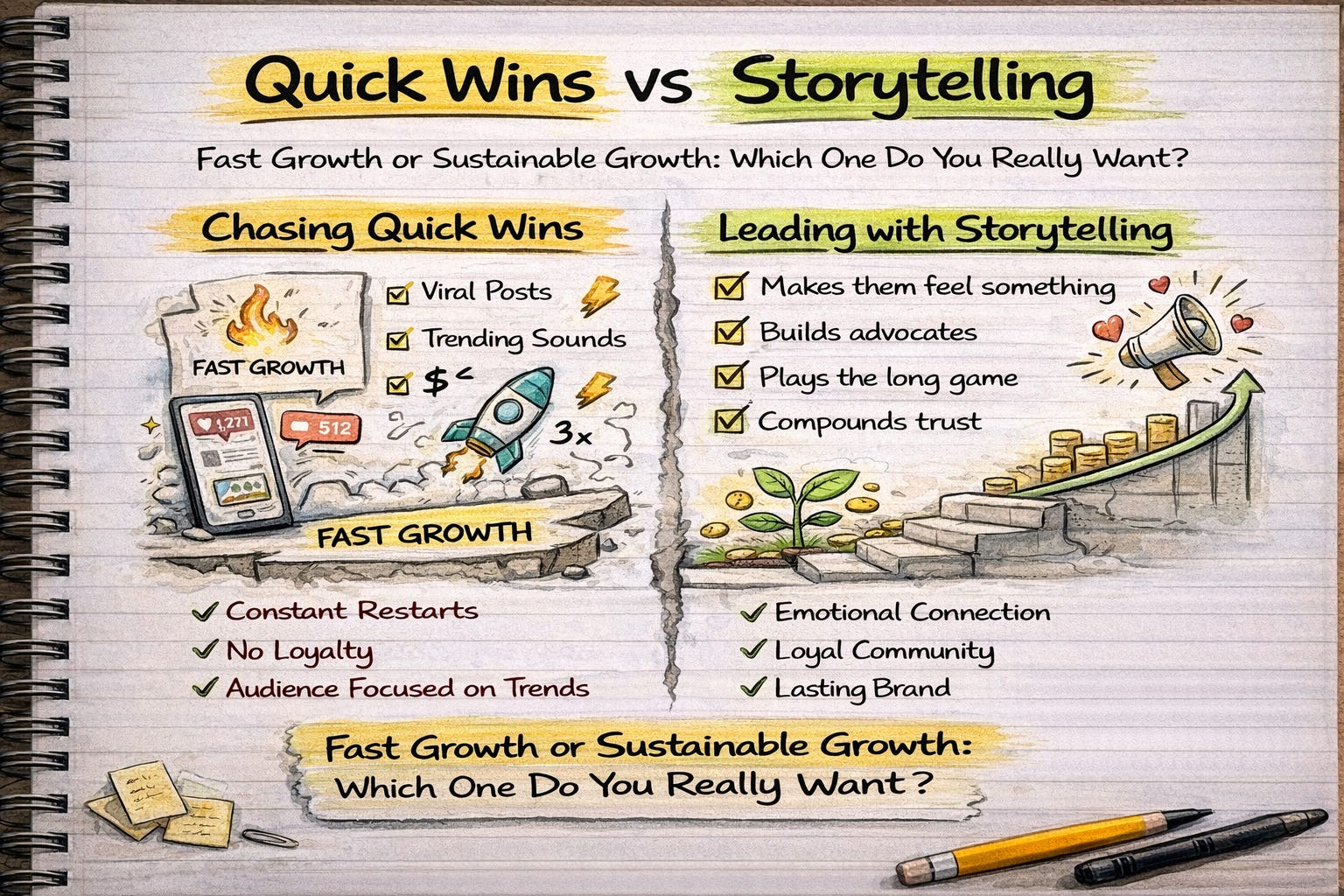
Quick wins don't build brands
Storytelling does. Here's why it's worth the long game.

I see people chasing quick wins all day.
Viral posts. Trending sounds. Whatever gets the most likes this week.
And six months later, they’re starting over. New audience. No loyalty. No momentum.
The worst part is they think fast growth equals sustainable growth. It doesn’t.
Here’s what I mean.
When you lead with storytelling, you’re not chasing quick wins. You’re building a brand that actually lasts.
And that’s a completely different game.
1/ People remember how you made them feel
Here’s what happens with most marketing.
Someone sees your ad. Clicks. Buys. Forgets you existed.
That’s a transaction. Not a relationship.
But when you tell stories, something different happens.
People remember how you made them feel. Not what you sold them.
They remember the founder who talked about failing three times before getting it right.
They remember the customer story about finally feeling confident.
They remember the behind-the-scenes where you showed the messy reality.
And when they need what you offer again? They come back to you.
Not because you had the cheapest price or the flashiest ad.
Because they remember how you made them feel.
That’s the difference between one-time buyers and repeat customers.
2/ Emotional connection creates loyal advocates
Most brands treat customers like transactions.
Buy the thing. Leave a review. Maybe come back.
But when customers feel emotionally connected, they become something else entirely.
They become advocates.
They tell their friends. They defend you in comments. They share your content without being asked.
Not because you paid them. Because they genuinely care about your brand.
Example.
I know a brand that posts customer stories every week. Real people. Real transformations. Real words.
Their customers don’t just buy. They recruit.
“You need to try this.” “This brand gets it.” “Finally someone who understands.”
That’s not advertising. That’s advocacy.
And advocacy is worth 10x more than any ad you could run.
Notice how...
They didn’t pay for those recommendations
They didn’t incentivize the sharing
It happened because the emotional connection was real
You can’t buy that. You have to build it.
3/ The long game compounds
Here’s what nobody tells you about storytelling.
The first story you tell won’t change everything.
Neither will the second. Or the tenth.
But by the hundredth? You’ve built something real.
Every story adds to the foundation. Every piece of vulnerability builds more trust. Every customer transformation reinforces your credibility.
It compounds.
Month one: A few people pay attention.
Month six: You have a small community.
Month twelve: You have advocates who recruit for you.
Year two: You have a brand that people trust without needing proof.
That’s the long game.
And it’s worth way more than the quick win.
Real world example
A hair brand launched with one clear mission. Center Black women in beauty. Change how textured hair was spoken about.
They didn’t run massive ad campaigns. They told stories.
Customer stories about embracing natural hair after years of relaxers.
Founder stories about why representation mattered.
Behind-the-scenes of how they created products differently.
First year? Slow growth. Building trust one story at a time.
Year three? They’d surpassed brands that had been running for decades.
Why? Because they built emotional connection. Not just customer transactions.
Notice how...
They focused on long-term trust over quick sales
Every story reinforced their mission
They built a movement, not just a customer base
That’s what storytelling creates when you commit to it.
What most brands get wrong
They try storytelling for a month. Don’t see massive results. Quit.
“Storytelling doesn’t work for my business.”
Wrong.
You didn’t give it time to compound.
You posted three stories and expected 10,000 followers.
That’s not how this works.
Storytelling isn’t a hack. It’s not a growth strategy for overnight success.
It’s a long-term brand-building approach.
And the brands that stick with it? They’re the ones still standing when the viral trends die out.
What this means for you
If you want quick wins, storytelling isn’t for you.
Run ads. Chase trends. Post whatever gets likes this week.
But if you want to build something that lasts, start telling stories.
Real ones. Consistent ones. Vulnerable ones.
Don’t expect it to change everything in week one.
Expect it to build over time.
Every story you tell adds to the foundation.
Every moment of vulnerability creates more trust.
Every customer transformation reinforces your credibility.
It compounds.
And six months from now, a year from now, you’ll have something most brands never build.
A community that actually cares. Not just a customer list.
Your move
You’ve seen the science. You know where storytelling shows up. You understand why real beats polished. You have the system.
Now you just need to start.
One story this week.
Not perfect. Not polished. Just real.
Your why. A customer transformation. Behind-the-scenes. Whatever feels true.
Post it. Don’t overthink it.
Then do it again next week. And the week after.
That’s how you build a brand people remember.
Not through quick wins. Through consistent storytelling that compounds over time.
What have you got to lose?
Your audience wants to hear these stories. They’re waiting for you to be real.
Start now. Build long-term.
Want help figuring out your first story to tell? Reply “STORY” and I’ll show you what I see.
— Stephen
Drop a comment: Are you playing the short game or the long game?